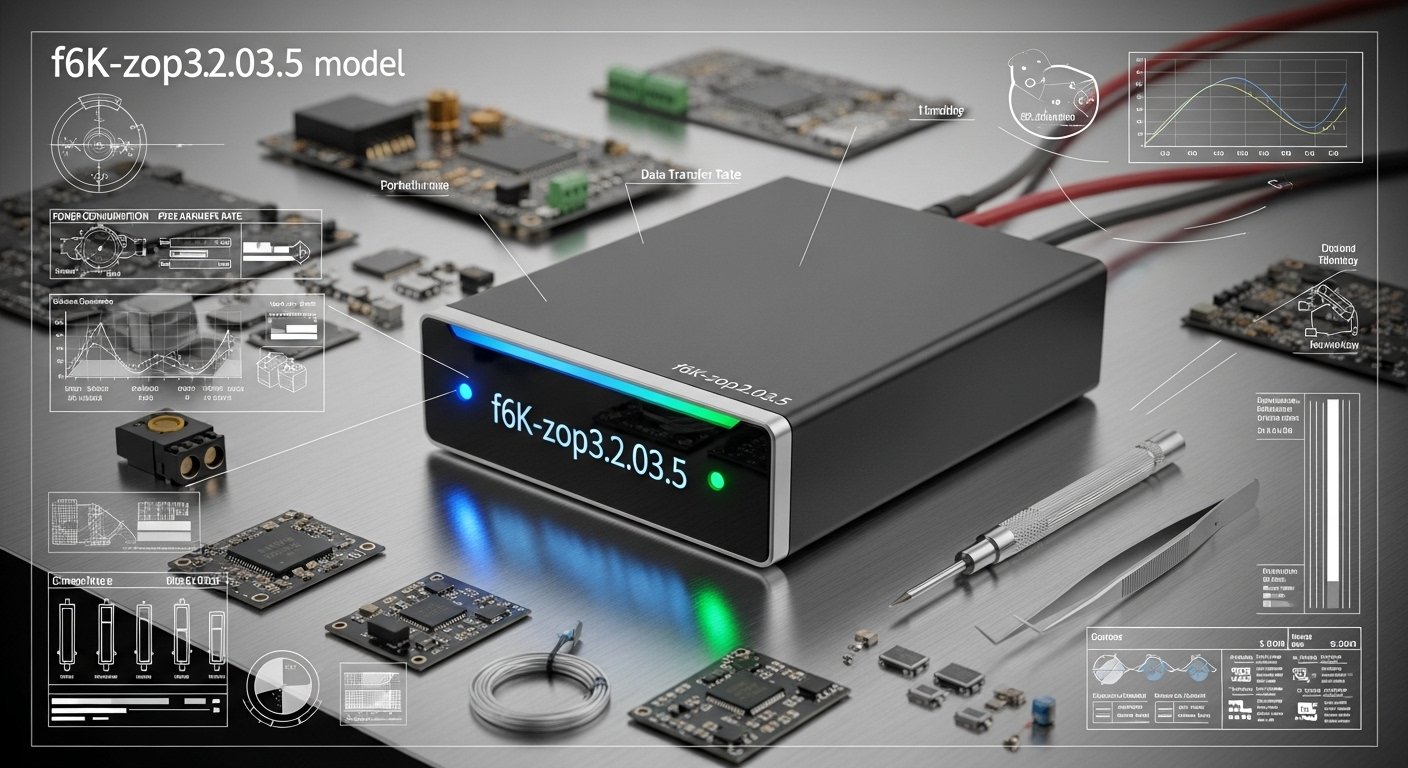
The f6k-zop3.2.03.5 model is gaining attention across technical and industrial communities due to its adaptable architecture and performance-driven design. Whether used in digital systems, mechanical integration, or automated environments, this model represents a structured approach to precision, efficiency, and scalability. Understanding how the f6k-zop3.2.03.5 model works, where it performs best, and what sets it apart is essential for professionals seeking reliable solutions in competitive environments.
Understanding the Core Architecture
At its foundation, the f6k-zop3.2.03.5 model is built around modular design principles. This means each component functions independently while contributing to a unified system. Such an approach improves maintainability and reduces downtime during upgrades or repairs.
The internal structure focuses on optimized signal handling and performance balancing. Instead of overloading a single processing channel, the f6k-zop3.2.03.5 model distributes operations efficiently. This balanced distribution enhances operational stability and reduces the likelihood of system bottlenecks.
Another defining feature is its layered configuration. Each layer is responsible for a specific task—data input management, processing logic, output execution, and feedback monitoring. This segmentation improves reliability and simplifies troubleshooting.
Key Features That Define Performance
1. Precision Control Mechanism
One of the strongest advantages of the f6k-zop3.2.03.5 model is its precision calibration system. It allows accurate adjustments based on environmental variables or operational demands. In high-performance settings, even minor inconsistencies can cause inefficiencies, so this feature significantly increases dependability.
2. Adaptive Scaling
Modern systems must scale without losing efficiency. The f6k-zop3.2.03.5 model includes adaptive scaling capabilities that allow it to expand capacity while maintaining consistent output. Whether applied in small frameworks or large infrastructures, performance remains stable.
3. Integrated Safety Protocols
Safety remains critical in any advanced model. The f6k-zop3.2.03.5 model incorporates automated safeguards that detect irregular activity. When thresholds are exceeded, protective responses activate immediately to prevent operational damage.
Practical Applications Across Industries
The versatility of the f6k-zop3.2.03.5 model makes it suitable for multiple industries. In manufacturing environments, it supports automation lines by optimizing response time and ensuring accuracy in repetitive tasks. In digital frameworks, it enhances system coordination and workflow synchronization.
Energy management systems also benefit from the f6k-zop3.2.03.5 model because of its efficiency optimization. By analyzing consumption patterns and adjusting operations dynamically, it reduces waste and improves sustainability.
In research and development settings, the model provides a reliable test platform. Its structured architecture allows developers to simulate scenarios without compromising core stability.
Performance Optimization Strategies
Even though the f6k-zop3.2.03.5 model is designed for efficiency, maximizing its potential requires strategic configuration.
First, calibration should align with operational goals. Fine-tuning performance parameters ensures optimal output. Second, regular diagnostic checks maintain system integrity. Monitoring feedback loops helps detect performance variations early.
Environmental alignment is another important factor. Installing the f6k-zop3.2.03.5 model in conditions that match recommended specifications prevents strain and extends longevity. Controlled temperature, proper ventilation, and stable power input significantly influence results.
Comparison with Conventional Models
Traditional systems often rely on fixed processing pathways. While functional, they lack the adaptability found in the f6k-zop3.2.03.5 model. Conventional setups may experience performance drops under increased workload, whereas this model adjusts dynamically.
Additionally, older models typically require manual recalibration for upgrades. In contrast, the f6k-zop3.2.03.5 model supports seamless integration of enhancements, reducing operational interruptions.
Efficiency metrics also demonstrate noticeable improvements. Through distributed processing and layered management, this model reduces redundant operations and improves response accuracy.
Long-Term Reliability and Maintenance
Durability plays a crucial role in system selection. The f6k-zop3.2.03.5 model is engineered with resilient materials and structured redundancy. This ensures that even if one subsystem encounters issues, overall functionality remains intact.
Maintenance procedures are streamlined due to modular segmentation. Instead of dismantling the entire framework, technicians can isolate and service specific components. This reduces downtime and minimizes cost.
Routine updates further strengthen long-term performance. Because the f6k-zop3.2.03.5 model supports structured firmware adjustments, improvements can be implemented without compromising stability.
Why Professionals Choose This Model
Decision-makers often prioritize three elements: performance consistency, scalability, and cost-efficiency. The f6k-zop3.2.03.5 model delivers on all three fronts.
Its adaptability ensures relevance in evolving technological environments. As industries shift toward automation and intelligent integration, systems must respond dynamically. This model provides that flexibility without sacrificing precision.
Furthermore, the structured design simplifies integration into existing frameworks. Organizations do not need complete overhauls; they can gradually incorporate the f6k-zop3.2.03.5 model into current systems.
Future Outlook
Technological advancement demands models that can evolve. The architecture of the f6k-zop3.2.03.5 model positions it well for future expansion. With ongoing development in smart systems and automation, adaptable frameworks will dominate industry standards.
As optimization techniques continue to improve, this model’s layered structure and distributed processing will support more advanced integrations. The emphasis on efficiency and stability ensures it remains competitive in high-demand environments.
Conclusion
The f6k-zop3.2.03.5 model stands out as a performance-oriented, scalable, and reliable solution suitable for diverse applications. Its modular architecture, adaptive scaling, and integrated safety systems provide measurable advantages over conventional alternatives. From industrial automation to digital infrastructure management, it offers both precision and flexibility.
For organizations seeking structured efficiency and long-term reliability, the f6k-zop3.2.03.5 model represents a forward-thinking investment. Its design philosophy emphasizes balance, control, and adaptability—qualities essential in today’s rapidly evolving technical landscape.